
When USAID careers came to an abrupt end, two RFG Fellows discovered that new paths to meaningful and impactful public service can be forged in unexpected ways.
In Ghana, a young girl stood before a microphone at a national spelling bee, competing against students from across the country. She had traveled from the country’s far north. She was blind. And she was, as Nathan Strand remembers, “nailing every single letter in question.”
For Nathan, a contracting officer with the U.S. Agency for International Development (USAID), the moment represented something much bigger than a spelling competition. Behind that young girl’s opportunity was an education program providing textbooks, Braille materials, and training for teachers of blind students. Somewhere along the way, Nathan’s signature had helped authorize the funding that made it possible.
“That only happened because of USAID,” he recalled. It was a reminder that the contracts, budgets, and paperwork of government service weren’t just administrative tasks. They could change lives. Nathan had spent years making that kind of work possible, from Colombia to Ghana to Washington, D.C. He expected to keep doing it. Then, in 2025, his career at USAID came to an abrupt end. He wasn’t alone.
Across the agency, thousands of dedicated public servants faced the sudden loss of careers they had spent years building. Among them was Katherine Maxwell, a younger colleague working in USAID’s Bureau for Global Health, whose future in federal service had seemed to be just beginning. Nathan and Katherine had entered public service nine years apart, both through the RFG Fellowship at Syracuse University’s Maxwell School. Both had built their professional identities around work they believed mattered. And neither had planned to leave USAID.
When the career you planned disappears
Nathan’s journey into international development began as a college student studying French. Given the opportunity to study abroad in France or Cameroon, he chose Cameroon. The experience changed his direction. “That kind of was the spark that started me on this international path,” he recalled. He eventually earned his graduate degree at Maxwell as an RFG Fellow and joined USAID’s Foreign Service as a contracting and agreement officer.
Over the next decade, his work took him across the world. In Colombia, he supported programs connected to the country’s peace process. In Ghana, he witnessed how investments in education could open doors for children who might otherwise have been left behind. He also worked with small community organizations whose leaders had spent years trying to make a difference with limited resources. Federal funding could finally give them the infrastructure to grow and sustain that work. For Nathan, this was the reward of public service: knowing that the machinery of government, when it worked well, could help people accomplish extraordinary things.
Katherine’s path was different, but her sense of purpose was much the same. A 2022 RFG Fellow, she entered federal service through the Presidential Management Fellows Program, then one of the most competitive paths into government. As a budget analyst in USAID’s Bureau for Global Health, she helped ensure that resources reached programs serving communities around the world. Her responsibilities were technical, but the consequences were deeply human. Budget decisions could affect the delivery of public health programs, the continuity of services, and the lives of people she might never meet.
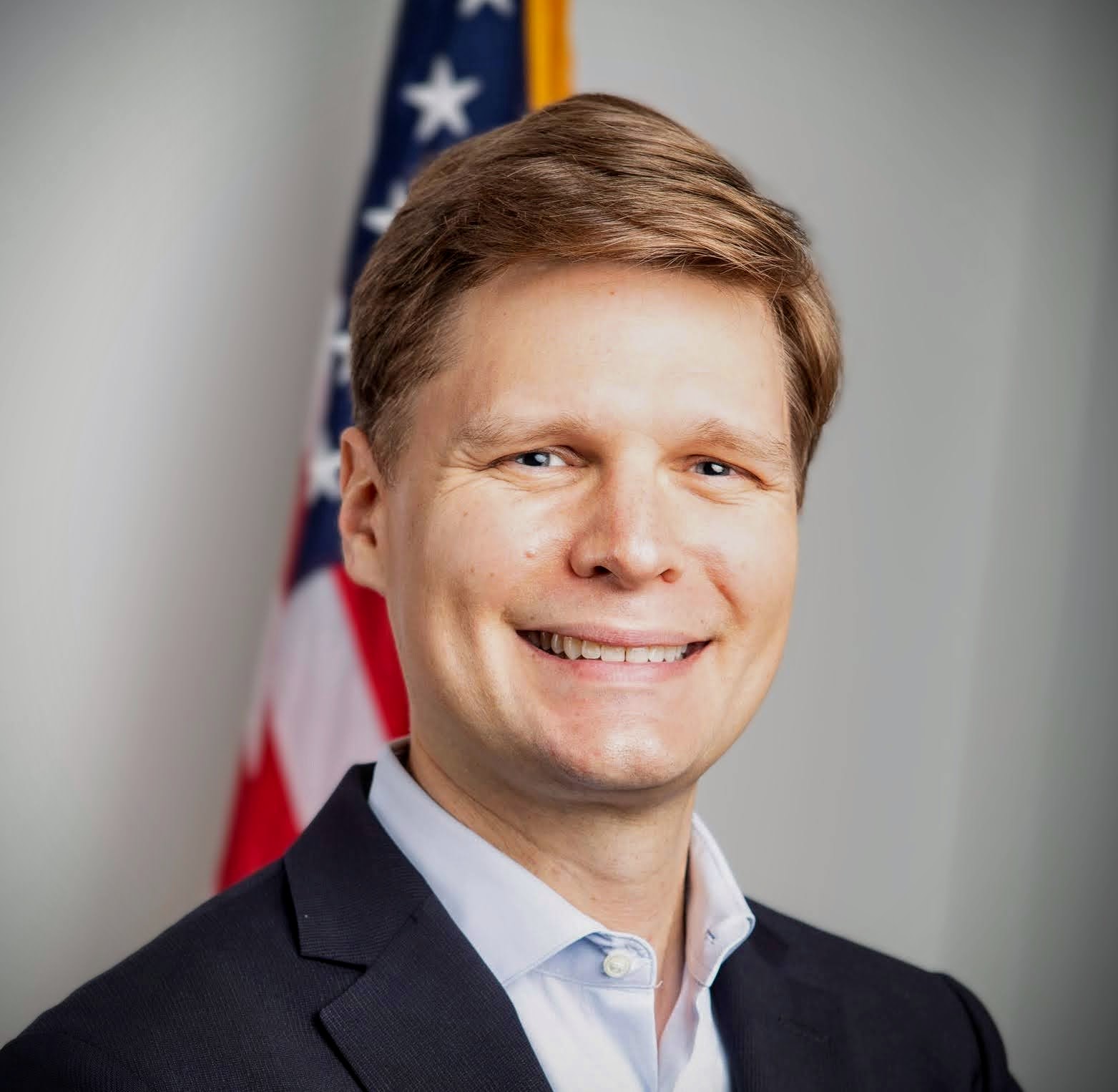

Nathan Strand, left, is now director of grants management at American Farmland Trust. Katherine Maxwell is a senior consultant at Unison. Both earned their graduate degrees at Syracuse University’s Maxwell School as RFG Fellows.
She and Nathan had found careers that connected their professional skills to a larger public purpose. And then those careers were interrupted.
In February 2025, Nathan was placed on administrative leave as USAID’s operations were being curtailed. His federal position ended on July 1. “It really was essentially like a grieving process for most folks,” he said, adding that many former colleagues were still going through it. Katherine’s position also ended that July. For both, the challenge wasn’t simply unemployment. It was the loss of a professional community, a familiar future, and work that had helped define who they were.
Nathan remained in contact with colleagues around the world, sharing information and trying to help. “You can’t just step away,” he explained. “You want to make sure things get better.” But eventually, both had to confront a difficult question. What do you do when the work you believe in still matters, but the job you loved is gone?
Reinvention wasn’t part of the plan
For Nathan, finding another job meant navigating a professional landscape he hadn’t expected to encounter again. “I had not expected to have to put together a CV, to have to network, to have to interview for all these jobs,” he said. Even the usual advice to reach out to professional contacts presented a problem. “I’d say 75 plus percent of my network was out of work.”
The people he would normally turn to for leads were facing the same uncertainty. Instead of searching alone, Nathan joined forces with former USAID colleagues to create a Job Search Council, inspired by Phyl Terry’s book Never Search Alone. The group eventually grew to six people. They helped one another sharpen their goals, exchange ideas, stay accountable, and cope with the emotional weight of losing their careers. Nathan also made a counterintuitive decision: instead of applying for everything, he narrowed his search to grants or operations work with a mission-driven organization in Washington, D.C. It gave him focus.
Katherine faced a different challenge. Early in her career, she had expected to continue building experience within government, not suddenly start over. Many of her older colleagues retired after leaving USAID. That wasn’t an option for her. “They’re retiring, but I can’t do that right now,” she remembered thinking. She took time for family responsibilities before beginning her search in earnest. Then she approached the process almost like another professional assignment: learning how to interview, practicing her responses, working with career coaches, and drawing on her personal and professional relationships. She even developed a Taylor Swift playlist to get herself ready for interviews. “If any RFGs want to know my Taylor Swift playlist for getting ready for an interview,” she joked, “I developed that!”
The detail is small, but revealing. Reinventing a career takes more than an updated résumé. It takes confidence, emotional resilience, and sometimes a little music. And neither Katherine nor Nathan had to figure it all out alone.
The value of a network built to last
One of the enduring benefits of the RFG Fellowship is something that can’t be measured at graduation: the relationships fellows build with people who share a commitment to public service. Years after leaving Maxwell, those relationships became particularly important.
Katherine’s former classmates sent job leads, offered encouragement, and helped her stay connected through an uncertain period. Syracuse University’s alumni career services provided coaching, while RFG’s partnership with Feds Forward offered additional career-transition support. Nathan also worked with Feds Forward to translate his federal experience into language that would resonate with employers outside government. The support was practical, but it was also personal.
Losing a job that is central to your identity can make it difficult to imagine the future. Having people who understand your experience, recognize your abilities, and remind you of your value makes a difference. And those relationships don’t necessarily end when someone finds a job. Nathan’s Job Search Council continued meeting even after members began moving into new roles.
Nathan sees the same strength in the wider RFG network, which he describes as well connected across the federal government. “It’s a huge strength to leverage in RFG, and I’m really proud to be part of the Fellowship,” he said.
Putting USAID experience to work
In February 2026, Nathan joined American Farmland Trust as director of grants management. The geography had changed dramatically. Instead of supporting international development programs, he was now helping a national nonprofit manage grants and strengthen its work with rural American communities. The technical expertise he developed at USAID—federal grants management, compliance, financial oversight, and team leadership—translated directly into his new position.
So did something less obvious: his ability to work across cultures, build trust, and support organizations doing important work in their communities. “I’m not working with someone in Haiti now, but I’m working with someone in Iowa,” he observed.
Katherine found her next opportunity through a former USAID colleague who referred her to Unison, a company whose software she had used while working in government. Today, as a senior consultant, she applies the knowledge she developed inside USAID to help support federal procurement operations. “Now I work for the company that makes that software,” she said. What once made her an experienced user now makes her a valuable resource to the people developing and supporting the system, and the federal agencies using it.
Neither Katherine nor Nathan landed exactly where they had expected. But neither abandoned the knowledge, skills, or commitment that brought them into public service in the first place. Their careers had changed direction without losing their sense of purpose.
Public service is bigger than a job title
There is a tendency to imagine public-service careers as a straight line: earn a degree, enter government, advance through the ranks, and retire after decades of service. For some, that path remains possible. But Nathan and Katherine’s experiences reveal another reality. Careers can be interrupted by institutional change, shifting priorities, economic pressures, and circumstances no individual can control. What remains is the expertise people have developed, the relationships they have built, and the values that first motivated them to serve.
For RFG Fellows entering an uncertain professional world, that’s an important lesson. A career in public service does not have to be confined to a federal agency. It can move between government, nonprofit organizations, universities, philanthropy, and private companies whose work supports public institutions and communities. Those paths aren’t interchangeable, and each offers different opportunities and challenges. But skills developed in one can often strengthen work in another.
The ability to manage public resources responsibly, work across cultures, build effective organizations, solve complex problems, and navigate government systems doesn’t disappear when a position ends. It travels with you. And so do the people who helped you develop those abilities.
Nathan recognizes that his path has never been perfectly straight. When he completed his fellowship in 2013, federal hiring was difficult. His first job after graduation was with a nonprofit organization funded by USAID, rather than with the federal agency itself. That experience eventually helped open the door to the Foreign Service career he loved. “I would not have the USAID Foreign Service career if not for that steppingstone job in the nonprofit sector,” he reflected.
Now, more than a decade later, he finds himself navigating another unexpected turn. But this time, he can look back and recognize something familiar. “I’m still on the right path,” he said. For Nathan, Katherine, and countless others whose careers have taken an unexpected turn, the lesson isn’t that every setback leads to something better. It is that a setback doesn’t have to erase what came before—or determine what comes next. Sometimes the route changes. Sometimes you have to find a new way forward. And sometimes, as Nathan puts it, “Taking that step, maybe in a different direction, brings you even further back in the same direction.”